

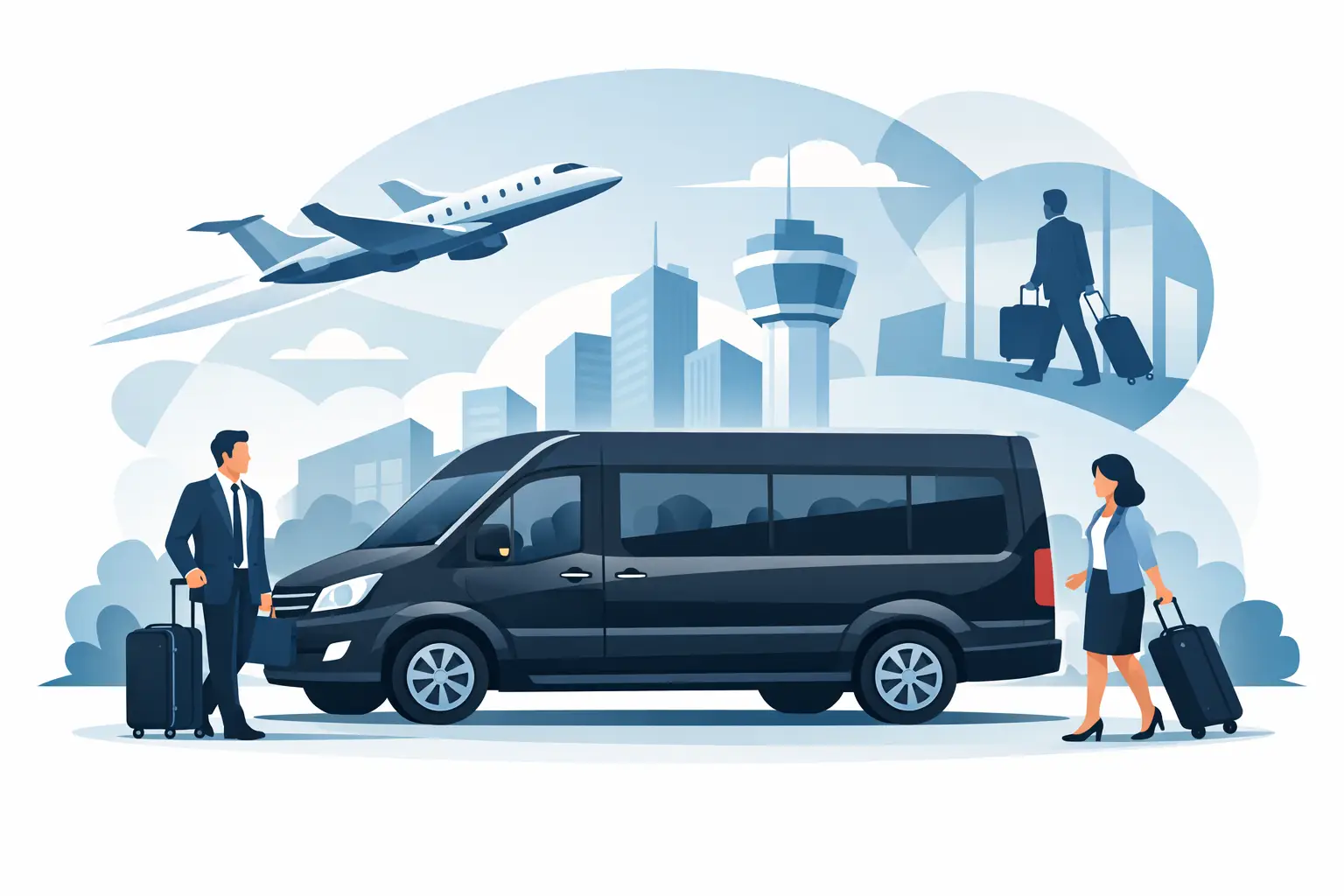
A delayed executive can affect more than one meeting. It can leave a client waiting at the airport, separate a team arriving for a conference, or create an unprofessional first impression before a corporate event has even begun. An executive shuttle service gives companies a controlled, comfortable way to move people together while keeping timing, presentation, and communication under one coordinated plan.
For business travel, the right vehicle is only part of the experience. The real value comes from having a professional chauffeur, a confirmed itinerary, suitable luggage capacity, and a support team that can respond when flight times, guest lists, or meeting locations change.
What an Executive Shuttle Service Should Deliver
An executive shuttle is designed for business groups that need more than a standard point-to-point ride. It may be used for airport arrivals, office transfers, board meetings, site visits, trade shows, incentive trips, hotel movements, or private corporate functions. Depending on the group size, the service can be arranged with executive vans, luxury MPVs, minibuses, coaches, or a combination of vehicles.
The objective is straightforward: every passenger should arrive prepared, on time, and without having to manage the details of the journey. That matters when employees are traveling after a long flight, when overseas guests are unfamiliar with local routes, or when a company is hosting senior leadership.
A quality service begins well before pickup. It includes clear confirmation of passenger numbers, baggage needs, flight information, pickup points, route preferences, and the level of vehicle required. It also means allowing sensible time for airport procedures, traffic conditions, and the time needed to get a group on and off the vehicle.
When a Shuttle Is Better Than Individual Cars
Individual chauffeured cars are often the right choice for C-suite travelers, VIP guests, or small delegations with separate schedules. However, a shuttle is usually the more practical option when people are arriving or departing together.
For example, a team of eight traveling from KLIA to a city-center hotel may be better served by one executive van than several sedans. Everyone leaves together, luggage is managed in one place, and the event organizer has one transport contact rather than multiple drivers to coordinate. The same approach works well for conference delegates moving between hotels and venues, or for teams attending meetings across several locations in a single day.
There is also a commercial consideration. A group vehicle can offer better value than arranging multiple private cars, especially for scheduled transfers. The trade-off is flexibility: passengers follow the same timetable. If some guests need private calls, additional stops, or an earlier departure, separate vehicles may provide a better experience.
Choosing the Right Vehicle for Your Group
The best vehicle depends on the purpose of the trip, not simply the number of passengers. A six-person leadership team with cabin luggage may prefer a premium MPV or executive van with room to work and relax. A larger delegation arriving with checked baggage may need a minibus with dedicated luggage capacity. For conventions, staff outings, or airport movements involving dozens of guests, a coach or bus may be the most efficient choice.
Vehicle presentation matters too. Client-facing transportation should reflect the occasion. An executive van offers a professional setting for company visits and airport transfers, while a luxury sedan may be better for a single VIP. For high-profile events, a limousine or premium luxury vehicle can make arrival part of the hospitality experience.
Before confirming a booking, provide accurate passenger and luggage details. A vehicle that appears spacious on paper can become uncomfortable when every traveler has large suitcases, presentation materials, or event equipment. It is better to reserve a slightly larger option than to begin a business trip with cramped seating or last-minute baggage issues.
Comfort Is a Business Requirement
Comfort is not an extra when passengers are expected to perform after arrival. Clean interiors, climate control, comfortable seating, bottled water where requested, and a courteous chauffeur can help guests reset between the airport, hotel, and meeting room.
For longer journeys, such as intercity meetings or corporate retreats, itinerary planning becomes even more valuable. Scheduled rest stops, meal arrangements, route timing, and return transfers should be agreed in advance. A well-managed journey allows the organizer to focus on the event rather than fielding transportation calls throughout the day.
The Details That Protect Your Schedule
Punctuality is essential, but it should not rely on guesswork. A dependable executive shuttle service accounts for pickup windows, flight monitoring when airport transfers are involved, traffic patterns, venue access rules, and the extra time needed for group boarding.
Corporate travel plans often change. A flight may land early, a meeting may run late, or an additional guest may need a ride. That is why responsive communication is as important as the vehicle itself. Your transportation provider should confirm who is managing the booking, how chauffeurs will identify passengers, and what happens if the itinerary changes outside normal office hours.
For airport arrivals, meet-and-greet instructions should be especially clear. International visitors may not know where to go after customs, and a vague pickup instruction can create unnecessary stress. A named contact, a clear meeting point, and active driver coordination make a meaningful difference.
Executive Shuttle Service for Events and Delegations
Events bring their own transportation pressures. Guests may arrive within a narrow time window, venues may restrict bus access, and departures can happen all at once. In these cases, a transport plan should be built around the event flow rather than treated as an afterthought.
A corporate dinner, product launch, or off-site meeting may require a shuttle loop between a hotel and venue. A conference may need staggered airport pickups across several flights. A visiting delegation may require a full-day charter with multiple stops, waiting time, and different vehicle classes for senior guests and support staff.
The strongest plans use a central coordinator, a passenger manifest where appropriate, and practical buffers between transfers. For large groups, sharing a concise transport schedule with attendees before travel reduces missed pickups and repeated calls. It is also wise to assign one on-site contact who can make decisions if the agenda changes.
Chauffeur2u supports this level of coordination with a broad fleet for executive travel, from premium cars and executive vans to larger group transport, allowing companies to match the vehicle and service level to each movement.
Questions to Ask Before You Book
A premium price does not automatically guarantee a premium experience. Ask whether the quoted rate is fixed, what is included in the itinerary, and whether waiting time, tolls, parking, or additional stops may affect the final cost. Transparent pricing helps finance teams approve transport with confidence and prevents surprises after the trip.
You should also ask about chauffeur standards, vehicle condition, passenger capacity with luggage, and support availability for early-morning or late-night movements. If the booking involves VIPs, executives, or international guests, discuss privacy expectations and preferred communication arrangements in advance.
For multi-vehicle assignments, confirm that every vehicle will follow the same service brief. Consistency matters when a company is hosting clients. Passengers should receive the same standard of professionalism whether they are traveling in a sedan, van, or coach.
Make Transport Part of the Guest Experience
Corporate transportation is often noticed only when it goes wrong. When it is planned properly, guests simply feel looked after. They are met on time, travel in comfort, know where they are going, and arrive with the right impression of the company hosting them.
Treat the shuttle plan as part of your event or travel program from the start. A carefully selected vehicle, professional chauffeur, and responsive coordination team can turn a complicated group movement into the calmest part of a busy business day.