

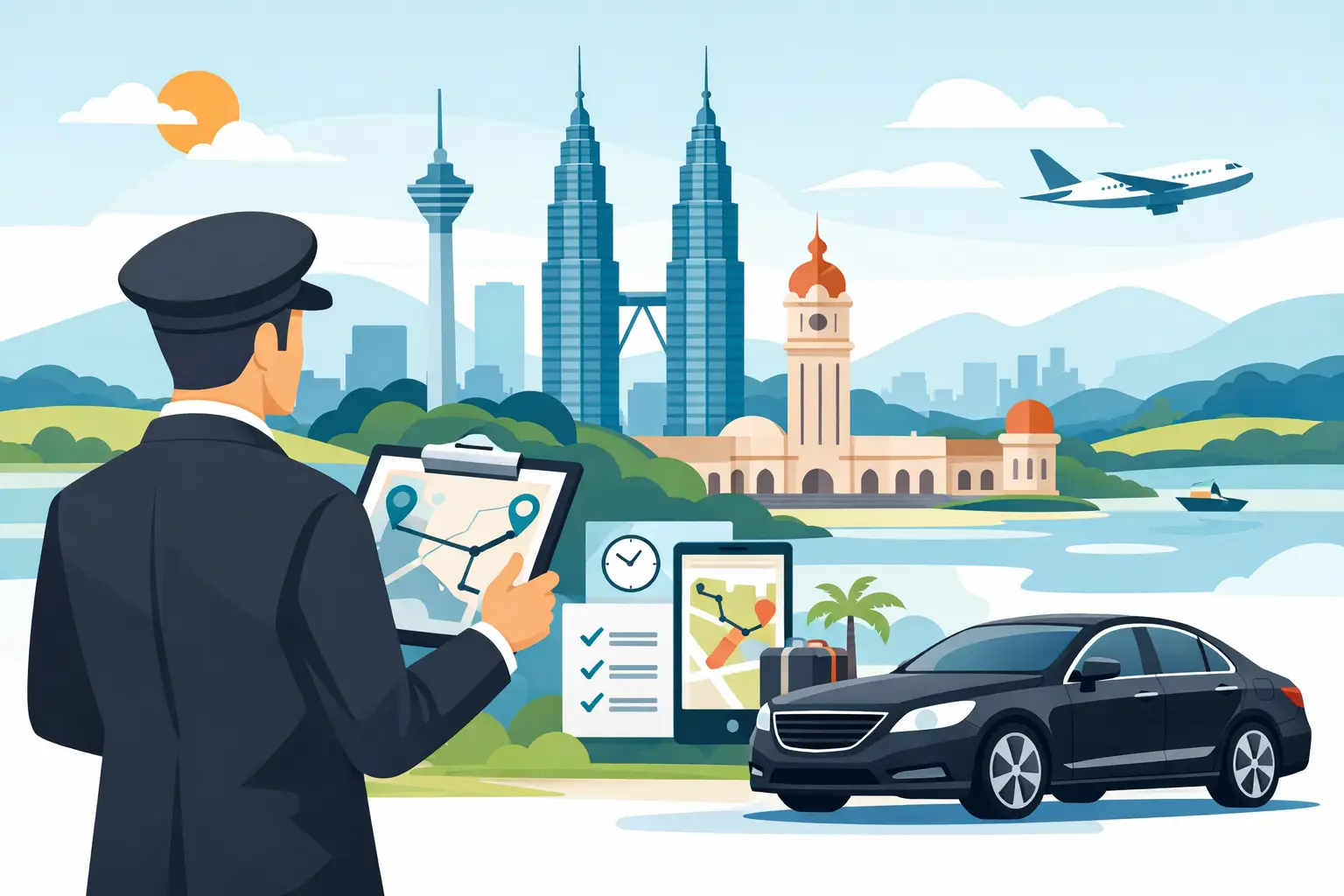
A delayed flight, a meeting that runs over, and one poorly timed hotel departure can put an otherwise well-planned day under pressure. A thoughtful chauffeur itinerary planning guide turns those moving parts into a schedule that protects your time, comfort, and presentation. Whether you are arriving for client meetings, organizing a wedding, or taking family to Genting, the goal is not simply to reserve a vehicle. It is to create a journey that works when real travel conditions change.
Start With the Purpose of the Journey
The right itinerary begins with the reason for travel. An airport transfer has different priorities from a corporate roadshow, a wedding program, or a full-day private charter. For an executive schedule, punctual arrivals, professional presentation, and quiet time between meetings may matter most. For leisure travel, flexibility, luggage space, scenic stops, and realistic pacing often matter more.
Write down every fixed commitment first: flight number, event start time, meeting address, restaurant reservation, hotel check-in window, or venue access time. Then identify the stops that can move if needed. This gives your chauffeur team a clear distinction between appointments that cannot be missed and moments where the day can flex.
For international arrivals, include the flight number rather than estimating only a landing time. Flight monitoring allows pickup planning to account for early arrivals or delays. If VIP airport assistance or fast-track arrangements are part of the service, state that at the outset so the arrival experience can be coordinated as one plan.
Build Time Buffers That Protect the Day
A precise-looking schedule is not always a practical one. Traffic conditions, weather, airport procedures, elevator waits, venue security, and loading luggage all take time. A premium itinerary should feel composed, not rushed.
As a general approach, allow a buffer before any commitment where a late arrival would affect business, hospitality, or a formal event. The amount depends on the location and time of day. A central Kuala Lumpur meeting may need more flexibility during weekday peak periods, while an intercity journey requires allowance for rest stops, highway traffic, and changing weather.
Do not confuse driving time with door-to-door time. Your actual journey includes leaving a hotel lobby, loading bags, reaching the pickup area, entering a venue, and walking to the meeting room. A professional chauffeur can manage the vehicle portion efficiently, but the itinerary should recognize the full guest experience.
Plan for arrivals before departures
For airport departures, work backward from the recommended airport arrival time, not from the flight departure time. Add the drive, expected traffic, luggage handling, and an appropriate collection window at the hotel or residence. For arrivals, allow for immigration, baggage collection, customs, and the time needed to reach the designated meeting point.
This approach is particularly valuable at KLIA, where terminal details and airline information can affect the pickup arrangement. Providing complete flight and terminal information helps avoid unnecessary calls or last-minute changes when you should be focused on your arrival.
Choose the Vehicle Around the Actual Itinerary
Vehicle selection is part of itinerary planning, not an afterthought. A sedan can be ideal for one or two executives with light luggage. An executive van may be better for a family, a visiting team, or guests carrying several large cases. For a wedding party, VIP engagement, or high-profile occasion, a luxury sedan, limousine, or specialty vehicle can support the tone of the event as well as the practical movement of guests.
Consider passenger count, luggage volume, route length, attire, and time spent in the vehicle. A three-hour intercity journey is very different from a 20-minute city transfer. Guests traveling in formalwear may need more room to enter and exit comfortably. A team moving between venues may benefit from a vehicle that keeps everyone together rather than splitting the group across multiple cars.
For larger programs, such as conferences, corporate dinners, or destination weddings, one vehicle type may not suit everyone. A coordinated fleet can assign executive cars for principals, vans for small groups, and buses for guest transfers. This keeps the experience organized while matching transport capacity to each group.
Share the Details a Chauffeur Needs
A chauffeur itinerary works best when it contains useful operating details, not just addresses. Building names can be similar, large hotels can have several entrances, and event venues may require a specific gate or loading area. Small details prevent avoidable friction.
Provide the full pickup and drop-off addresses, contact person, mobile number, flight details where applicable, number of passengers, luggage estimate, and preferred pickup time. If there are special instructions, include them clearly. These may involve a child seat, mobility support, a discreet pickup, extra waiting time, security coordination, or a preferred language for visiting guests.
For business travel, it helps to name the guest or company being collected. For an event, clarify who has authority to make changes on the day. A single point of contact makes adjustments faster and avoids conflicting instructions from multiple organizers.
Keep the itinerary in the right order
Route order matters. Group stops by area when possible, schedule time-sensitive appointments first, and avoid crossing the city repeatedly unless the meeting schedule requires it. A chauffeur service can advise on the most logical routing, but the itinerary should communicate the priority of each stop.
If a client meeting may end early or late, note that uncertainty. If lunch is optional, identify it as flexible. This allows the driver and coordinator to respond with better judgment than they could from a rigid list of addresses alone.
Plan Differently for Corporate, Leisure, and Event Travel
Corporate mobility benefits from consistency. Use agreed pickup windows, preferred vehicle categories, and a clear communication protocol for executives or visiting clients. If several meetings are scheduled in one day, retain the chauffeur on standby rather than booking isolated point-to-point trips. The vehicle becomes a controlled, private place between appointments, and the chauffeur remains ready when the schedule changes.
Leisure itineraries need room to breathe. A day trip may include sightseeing, shopping, dining, and photo stops that are difficult to time exactly. Rather than attempting to assign every stop a narrow window, set the key destinations and give reasonable ranges for the rest. For travel to destinations such as Genting Highlands, factor in the mountain route, weather, and each guest’s comfort preferences.
Weddings and formal events require another level of coordination. The itinerary should identify the bridal pickup, photography locations, ceremony arrival time, reception transfer, vehicle decoration requirements, and the final departure plan. Build in extra time for photos, wardrobe adjustments, and guest movement. It is better for the wedding car to be ready early than for the couple to feel they are racing the clock.
Confirm the Plan and Prepare for Changes
A day before the journey, review the itinerary in its final form. Confirm passenger names, pickup time, terminal or venue details, vehicle category, and primary contact number. This is also the right time to mention a changed flight, an additional suitcase, a new stop, or a revised guest count.
On the day, keep communications simple. Travelers should know who to contact, where to meet, and what vehicle to expect. Organizers should know how to request changes. A reliable chauffeur service will coordinate with care, but advance notice always creates more options than a last-minute instruction.
There is a trade-off between complete flexibility and a fixed-price charter. More stops, extended waiting, or a significantly longer route may change the service requirements. Be clear about likely variations during booking so the transport plan and pricing can be set transparently from the beginning.
Make the Vehicle Part of the Experience
The best itineraries recognize that transport is also hospitality. A clean, well-presented vehicle, a courteous professional chauffeur, and a calm journey set the tone before a meeting begins or after a long flight ends. This matters when collecting a valued client, welcoming family from overseas, or giving a couple a polished wedding-day experience.
Chauffeur2u can help translate a schedule into the right vehicle, route, and service arrangement, from airport collection to multi-stop private charter. Share the complete outline of your day early, leave room for the unexpected, and let every transfer support the occasion it is meant to serve.